How Running Can Teach About Being an Artist
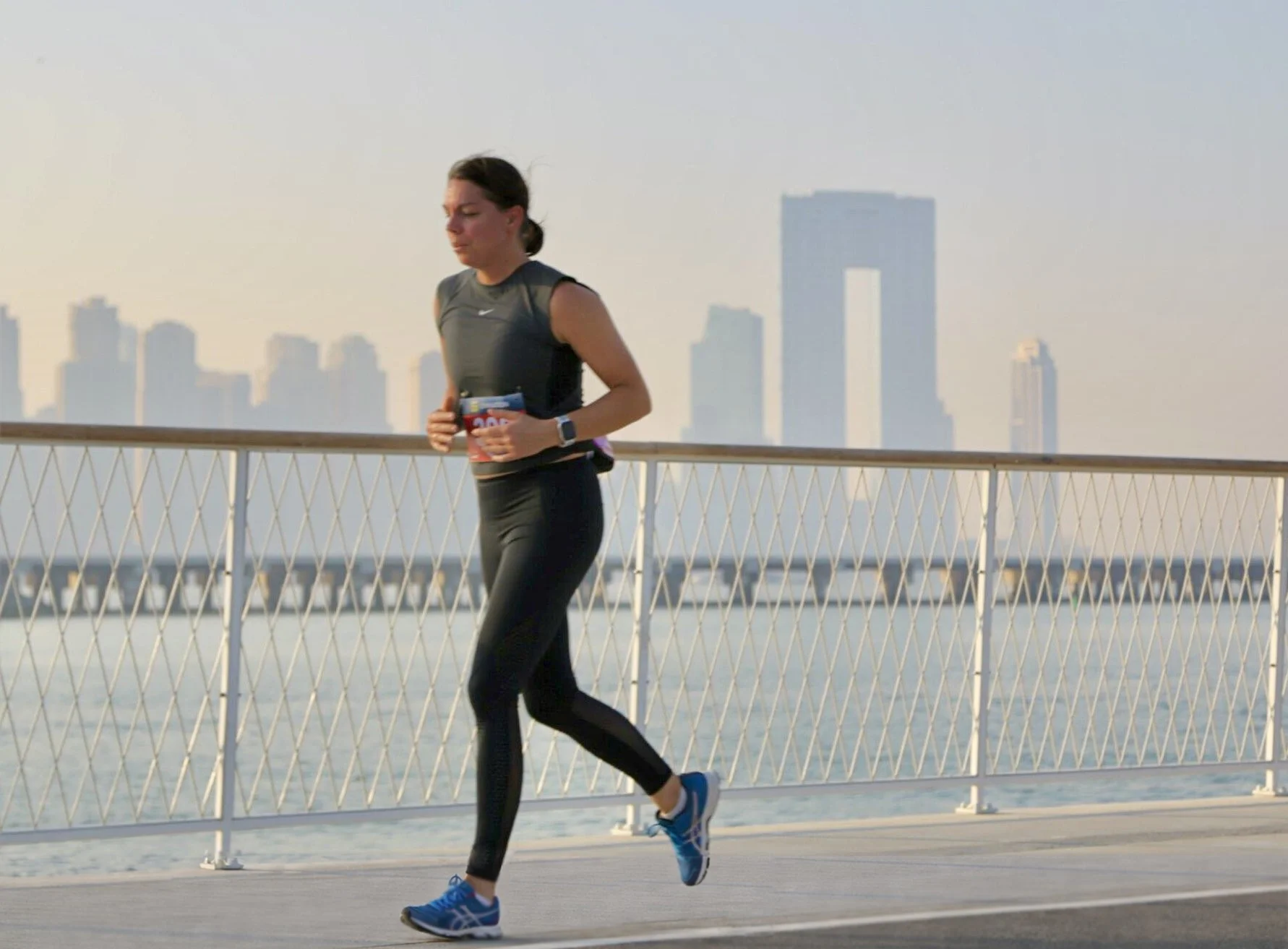
My first ever run in Dubai in November 2022.
I had a blurry sense of this for a while, without being able to fully articulate it. Then Murakami’s “What I Talk About When I Talk About Running” found me - and I believe it found me exactly when I was ready for it. Some books work that way. His comparison of running and writing is so alive that it was easy to extrapolate to my own practice as a visual artist.
Running and making art are the same practice, just in different forms.
During the last three years, I ran regularly. This process wasn’t and still isn’t the easiest one for me. Honestly, I started with the idea that I hated running. However, my life circumstances didn’t allow me to ride a bike as I prefer - first because of the weather conditions in Dubai, then because of my shoulder joint dislocation. So I gave running a chance, hoping that maybe we could become friends, or at least good colleagues.
Three years passed. Now I live in California, I’ve had my shoulder repaired with surgery, and I can ride my bike all year round on beautiful trails. And I still run. I’ve made progress in controlling my breath, lowering my heart rate, and refining my technique. I participated in a 5K Spartan Race last year and plan to repeat it this year, as well as run my first 10K.
I was surprised to discover that Murakami is a runner and a triathlete. It deepened my respect for this novelist. I was curious what a writer of fiction could tell me about running - and in the process of reading, I realized how much running and art practice have in common, whether it’s a novelist’s practice or a painter’s.
Murakami writes: “Most of what I know about writing fiction I learned by running every day.” The whole book explores the parallels between physical training and creative work. And I found them to be just as true for visual art as for literature.
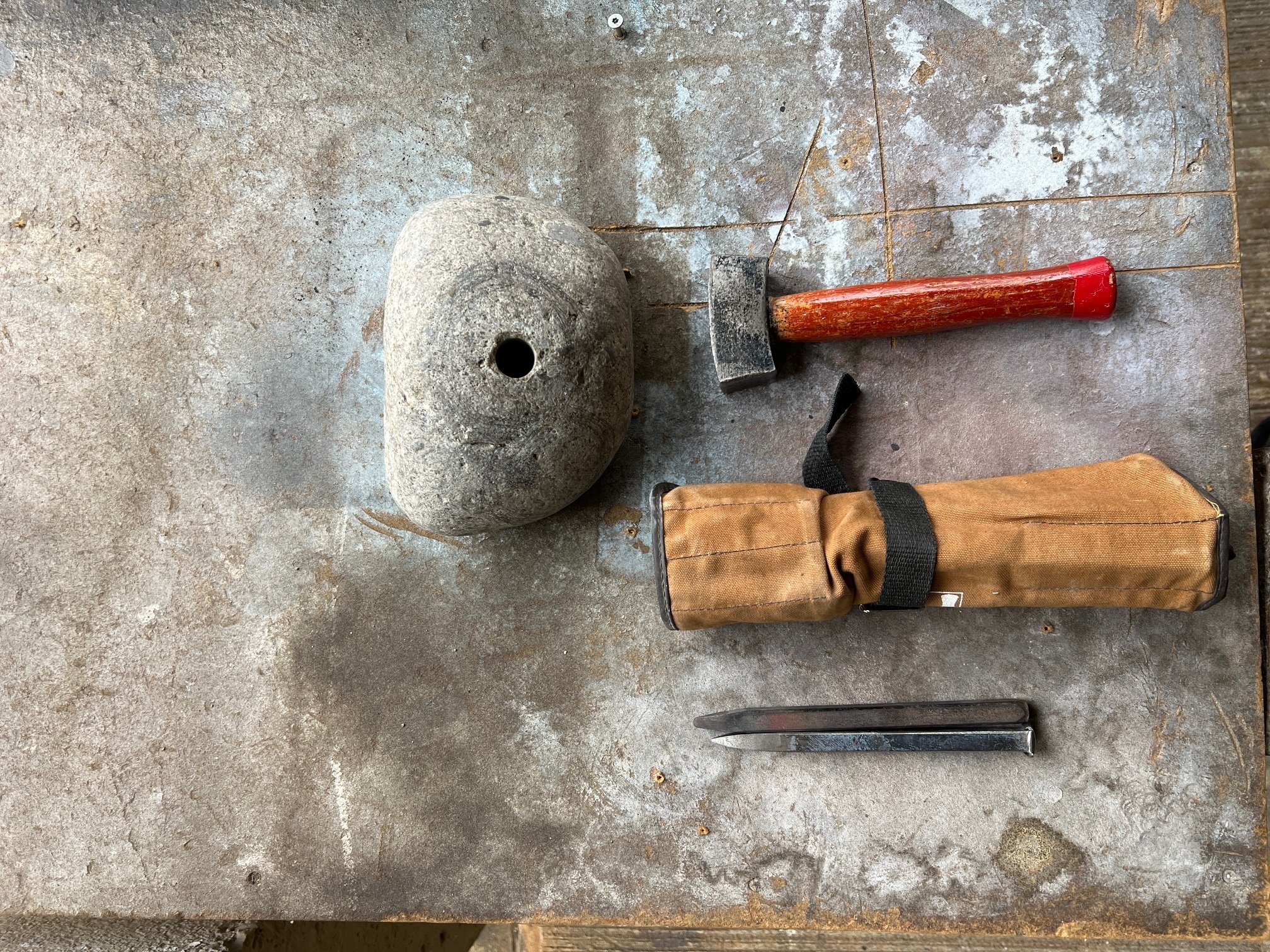
Drilling a hole in a stone was a long process. Spring 2024.
When Murakami analyzes what makes a good novelist, he identifies three components: talent, focus, and endurance.
Talent is given, but the other two (focus and endurance) can be developed through regular practice.
The same is true for an artist. No matter how talented you are, if you can’t practice regularly and maintain the rhythm over a long period of time, you lose your skill - the way you lose physical form when you stop training.
The inevitable ingredient of endurance is patience. That’s the hardest part. As an artist, you can spend years producing work, promoting yourself, and receiving little recognition - very small signs of positive feedback from the art community. Sustaining an art practice over the long term is hard. It’s very similar to running a marathon.
Murakami writes: “The toughest part of the marathon comes after twenty-two miles.” I felt this acutely while working on my Binom photobook. The closer you are to the end of a long project, the more exhausted you become - mostly emotionally, but physically too. As Murakami observes, in long-distance running, your only real competitor is the person you used to be. How do you not give up?
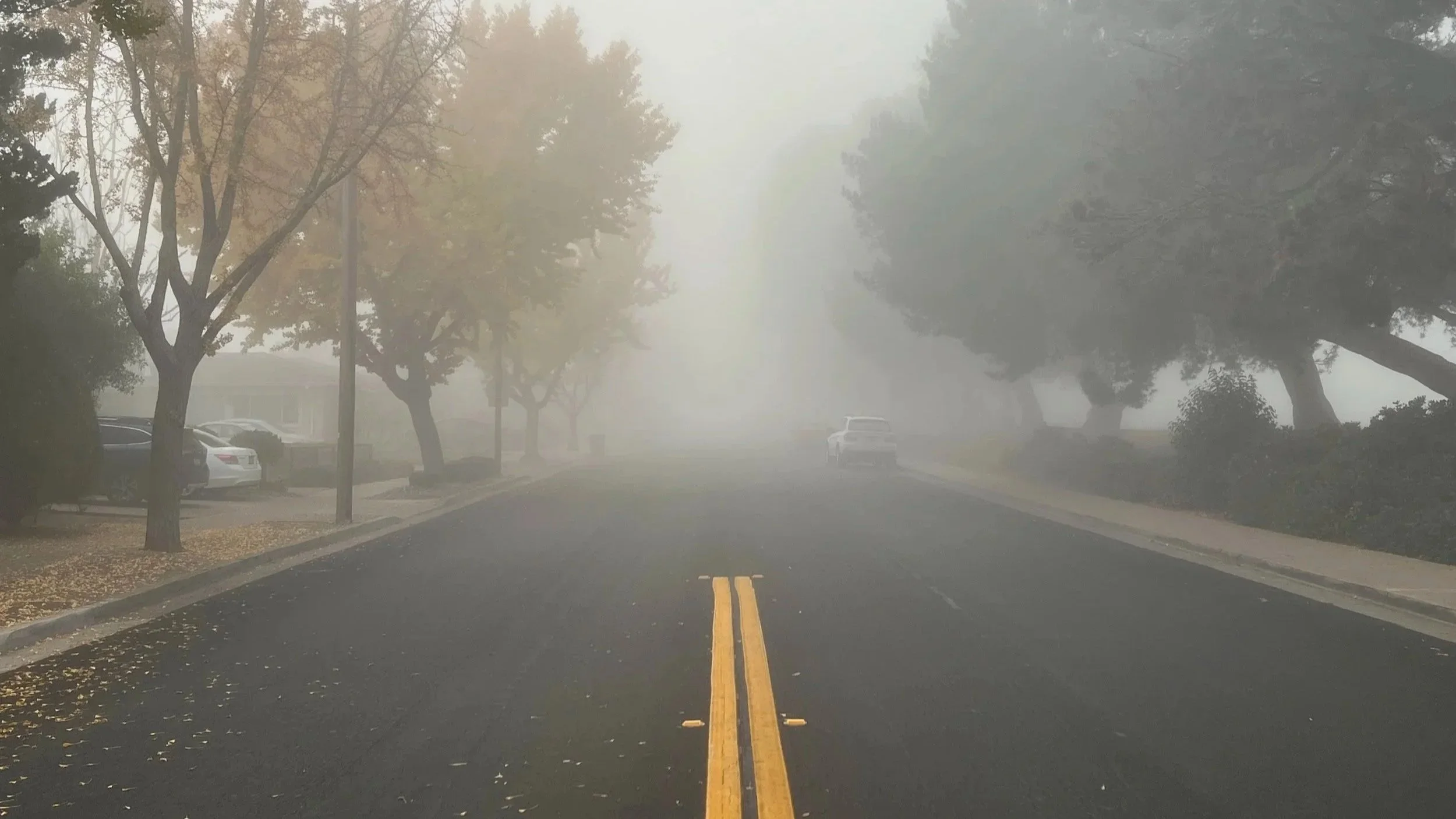
Foggy morning for a new run. 2024
For myself, I’ve learned to enter a state where reflection shuts off, and movement becomes purely mechanical. I call it “machine mode.” This was what carried me through sewing 92 copies of my photobook Binom during the Reminders Photography Stronghold residency in Tokyo.
Murakami describes a similar practice in long runs - focusing only on moving his feet forward, one after another. His mantra for this state: “I’m not a human. I’m a piece of machinery. I don’t need to feel a thing. Just forge ahead.”
I loved the idea that every runner develops their own mantra for the second half of a marathon. One runner shared his with Murakami:
“Pain is inevitable. Suffering is optional.”
This mantra has helped me during long runs, though I haven’t yet gone beyond 8 kilometers. I think it applies to artists too - though for us the pain is not physical. It’s more like emotional burnout: working hard to communicate something while receiving little recognition. But suffering is optional. That was a genuine revelation for me. I can change my thoughts, my reactions to exhaustion, and find motivation in unexpected places. I hope it helps someone else feel that too.
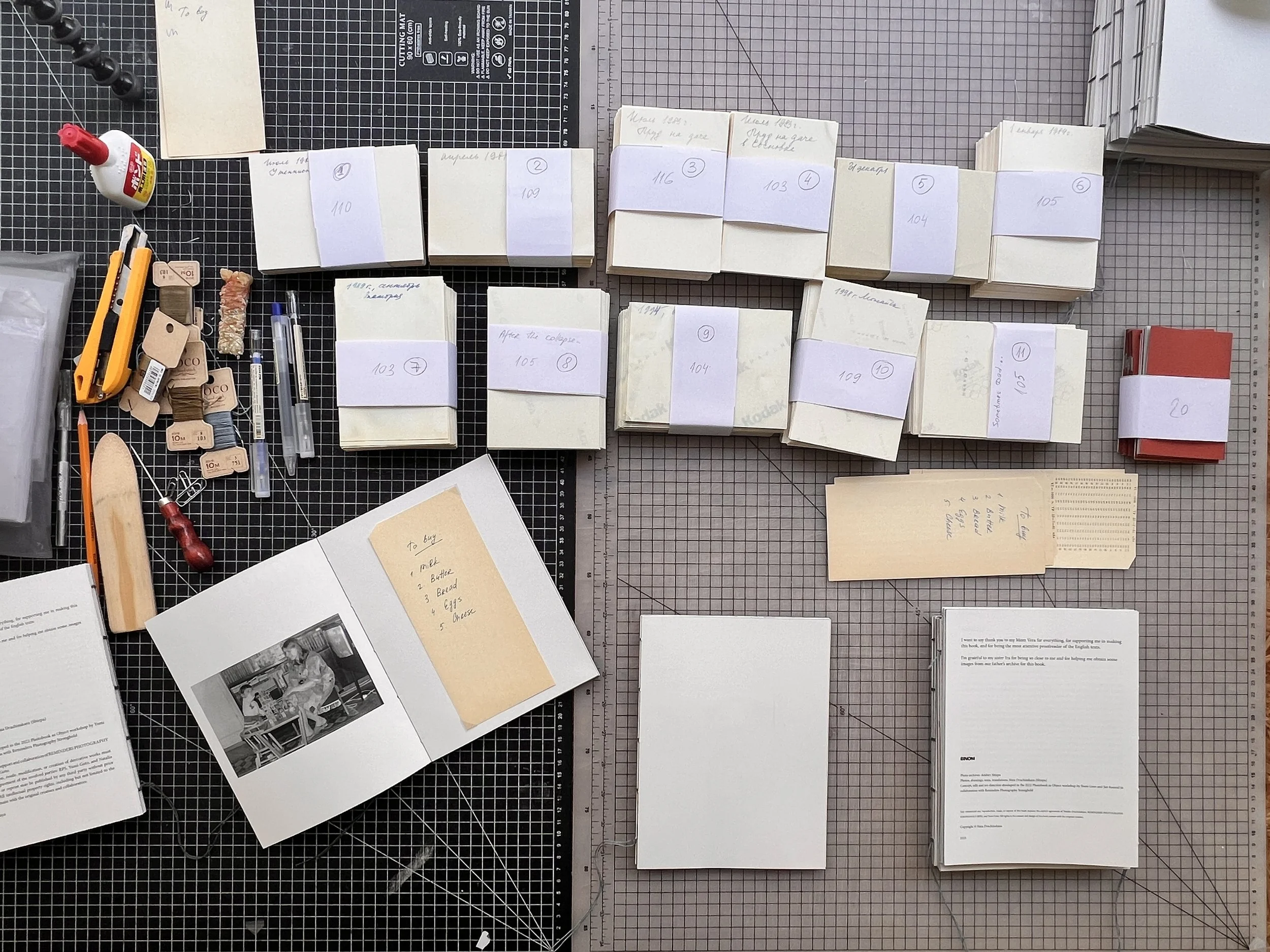
Self-publishing of Binom in Tokyo. Spring 2025.
There is also something I found in this book that I consider genuinely good news for artists - and it connects to the same marathon metaphor. In my experience, and from what I’ve observed in other artists’ trajectories, long tails work. The longer you sustain your practice, the greater the probability that recognition and meaningful response from the art community will eventually come. It’s similar to Warren Buffett’s investment philosophy: time is an amplifier. This isn’t a guarantee, but it’s a real pattern - and an honest reason to keep going rather than give up. The toughest part may come after twenty-two miles, but the finish line exists.
One of the most important passages in the book describes Murakami learning to swim again after a poor triathlon performance. It took him three years, much of that time spent searching for the right coach. Once he found one, progress came quickly. His conclusion: “This takes time, of course, but “sometimes taking time is actually a shortcut.” I couldn’t agree more - as an artist who has restarted her practice twice in two different countries, and as an athlete who has returned to sport after injuries and surgeries.
That is what I talk about when I talk about run and art practice.
